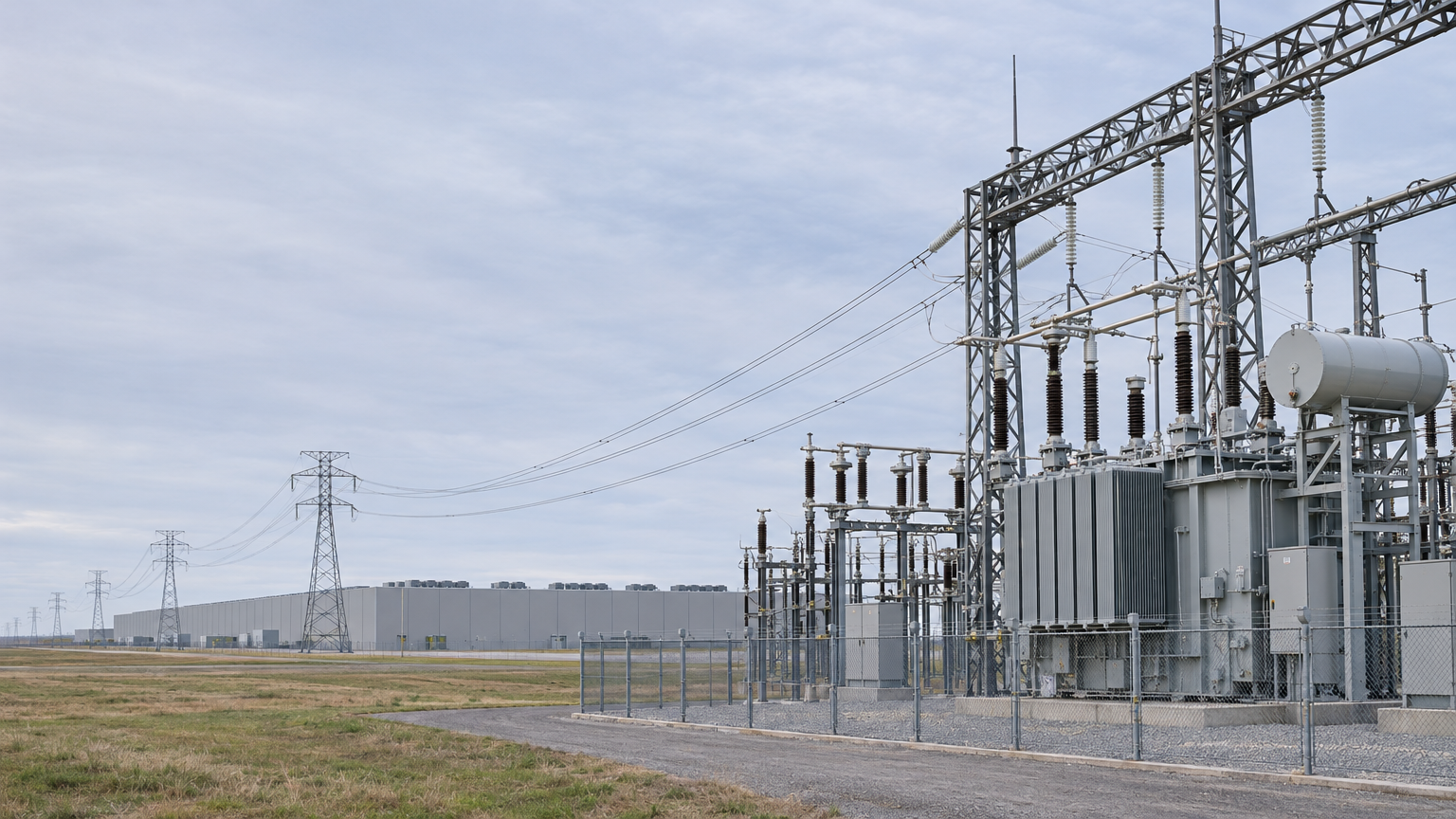
Wyoming Intertie's $2.8 billion is a promise to lend that site models should price at zero
The Energy Department offered a conditional loan of up to $2.8 billion for a 1.8 GW Wyoming line. Until the loan closes and crews break ground, buyers should treat that transfer capacity as an option, not supply.
Key argument
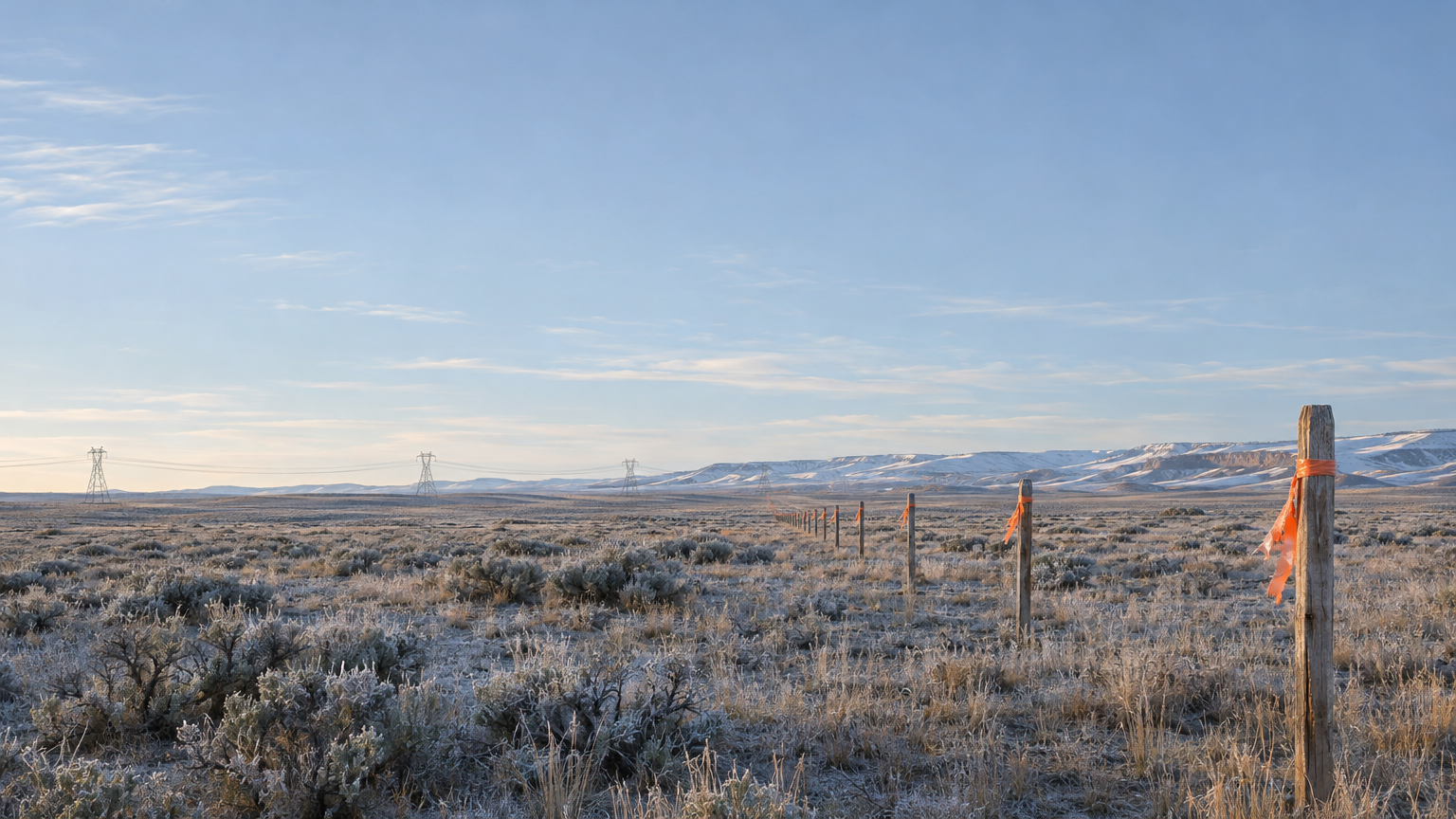
Until Grid United signs definitive financing documents and starts construction, anyone underwriting large loads near the SPP and WECC seam should give the Wyoming Intertie's approximately 1.8 GW no credit in base-case power supply.
The sentence that matters most comes at the end of the announcement. The U.S. Department of Energy said its Office of Energy Dominance Financing has made a conditional loan commitment of up to $2.8 billion to Grid United's Wyoming Intertie. According to the department, the line will add approximately 1.8 GW of transfer capacity and double what can move today between the Southwest Power Pool and the Western Electricity Coordinating Council regions. The agency estimates the project could deliver up to $39 billion in electricity cost savings across 17 states and puts its life at 30 years. Then its final paragraph sets out the condition: before the loan is documented and funded, the project "must satisfy certain technical, legal, environmental, and financial conditions".
My reading is that this is a financing milestone near the start of a long sequence. It is not money in the project, not steel in the ground and not current on the wires. The announcement is evidence of federal intent to lend. It gives no construction start, no in-service date, no route and no termination points. The release also says nothing about data centers or any other large load. When I connect the line to site selection, that is my inference, not the department's claim. I make it because a doubling of interregional transfer capacity is exactly the kind of headline that tends to show up in site pitches before it shows up in the ground.
Conditional commitment sits low on the milestone ladder
A transmission project has several distinct stages: announced, conditionally committed, definitively financed, funded, under construction, energized and in commercial operation. On the DOE's own wording, the Wyoming Intertie has reached the second. The office has said it intends to lend. It has not signed the documents that would bind it, and it has not disbursed anything. Both the loan amount and the savings figure carry the qualifier up to, so the $2.8 billion is a ceiling, not a drawn balance.
The savings estimate needs the same care. Up to $39 billion across 17 states is a large number, but the announcement gives no period, no discount rate and no method behind it. That leaves no way to tell whether it is an annual figure, a total over the 30-year life, or something in between. What would settle it is the underlying production-cost study: the hours in which power is expected to flow, the price gap between the two regions in those hours, and the assumed availability of the line.
The transfer figure is cleaner, because it is a capacity rating in gigawatts. The doubling claim implies the existing ties between the two regions carry roughly the same amount as the new line would add. That is an inference from the department's wording, not a disclosed number, and it would be confirmed by the current path ratings. Either way, the rating describes what the line could carry once energized. It says nothing about when that will be.
Intent is not money, and money is not megawatts.
A line between regions is not a connection to a campus
Transfer capacity moves electricity between two large systems. It does not create generation, and it does not give any particular site a connection to the grid. Even after energization, a campus near the route would still need its own substation, its own interconnection study and its own place in the local queue. The line changes the regional supply picture. In the hours when one side is short and the other has surplus, more power can cross the seam. That is valuable, and Secretary Chris Wright's framing of moving energy to where it is needed points at exactly that use. It is still a different thing from deliverable firm capacity at a specific meter.
Who gains leverage depends on facts the announcement does not give. Grid United gets a public signal that a federal lender has done enough review to commit conditionally. That should help it with private co-lenders and with shippers who might reserve capacity on the line, though the release names no shippers and no offtake contracts. Generators on whichever side holds cheaper surplus power would gain a larger market once the line runs. The parties carrying risk are the ones who would build a load forecast on that future import. That includes a developer who pitches a Wyoming or adjacent-region site as well supplied because a bigger intertie is coming, and a lender who accepts that pitch. Their exposure is to the gap between this announcement and energization, and the release puts no length on that gap.
A seam upgrade improves a region's options. It does not deliver a site's power.
Counting the line in a site model
What follows is analysis, not something the source prescribes. A buyer, lender or colocation underwriter screening land that would rely on power crossing this seam needs a simple rule for when to count the line. In the base case, give it zero credit while it sits at conditional commitment. Move it to partial credit only after definitive financing documents are signed and construction is publicly underway, and then only for termination points close enough to the site to matter. Give full credit at energization, and then only to the extent that local interconnection is also secured.
Two diligence questions follow. First, if a power supply agreement or lease at a nearby site assumes imports over the new line, what happens to price and delivery obligations if the line slips or the commitment lapses? Whether a delay counts as force majeure or as a breach depends on the contract and the governing law. That makes it a question for counsel and the term sheet, not something to read off a press release. Second, does the site's own interconnection timeline depend on the intertie's in-service date, or would the site be studied as if the line already existed? If a utility study assumes the line, the risk of delay has quietly moved onto the customer.
Count the wires when they carry power, not when a lender signals intent.
The case that federal backing already settles the risk
The strongest objection is that a conditional commitment from a federal lending office is a lot more than a press release. It usually follows substantial technical and credit review, and the department ties this one explicitly to the Executive Order Strengthening the Reliability and Security of the U.S. Electric Grid and to its SPARK program. A project carrying that level of policy priority has a better chance of clearing its conditions than an ordinary proposal. Waiting for energization before giving it any value could mean losing the land, queue positions and power agreements that early movers lock in while the line is built. On that view, zero credit is not caution. It is a decision to show up late.
I accept part of this. The option value is real, and a buyer who secures cheap land or an early queue position near a likely termination point while it is inexpensive is making a reasonable bet. That narrows my thesis. The rule is not to ignore the line. It is to buy exposure to it as an option and not to underwrite load against it. I still weigh the objection less heavily, for one reason. The conditions the department lists include environmental and legal ones, and for a long interregional line those are where schedules tend to slip. The release gives no timeline at all, so even a high probability of eventual completion says nothing about whether the power arrives in time for a specific tenant's ramp.
Three documents between this commitment and current on the wires
The first is the definitive loan agreement. If the Office of Energy Dominance Financing announces that it has signed the financing documents and begun funding, the line moves from intent to funded, and partial credit in site models becomes defensible. If the commitment stays conditional for a long stretch, or conditions are publicly reported as unmet, base-case credit should stay at zero. The announcement gives no deadline for that step.
The second is the route and termination points. If Grid United discloses where the line connects to each system, and those points sit near land with local interconnection headroom, nearby sites gain a real supply argument once the line is energized. If the endpoints are far from developable land, the benefit shows up mainly in regional prices and reliability, not in any one campus's power budget.
The third is the basis for the up to $39 billion savings estimate. If the department or the developer publishes the study, with a period and the assumed price spread between the two regions, buyers can judge whether power moving across the seam is likely to be cheap most of the time. If the value turns out to come mostly from extreme-weather and peak-demand hours, then the line buys resilience rather than low-cost supply, and site economics should be modeled that way. No publication date for that study is given either.
Sources
The Current is written by Josh Jiwoon Inn with AI assistance in drafting. It does not claim interviews or first-hand reporting, and every number is attributed to a named source. See the AI-assisted Disclosure and Methodology.