Samsung's vertical-stacking play moves the constraint from memory supply to packaging and thermal delivery
I read Samsung's zHBM and NEO's unified platform as a signal that memory density is no longer the bottleneck — packaging throughput and cooling infrastructure are.
Samsung showed concept models of zHBM, which vertically stacks HBM directly above AI accelerators, and zNAND-O, which vertically stacks multiple V-NAND chips through TSVs, as well as a 400-plus layer BV-NAND using wafer bonding, according to Semiconductor Engineering. Kioxia and Sandisk unveiled 10th-gen QLC 3D flash memory technology, with bit density surpassing 37 Gb per square millimeter and a 4.8 Gb per second interface, the same source reported. NEO Semiconductor introduced a unified AI memory platform that combines SRAM with higher-capacity memory types, also covered in the same roundup.
I read these announcements as confirmation that memory density is no longer the gating factor for AI infrastructure. The constraint has migrated. The question now is whether packaging fabs can produce vertical-stacked modules at datacenter volume and whether existing cooling systems can handle the thermal load that comes with putting more transistors in the same footprint. This is the migrating-bottleneck principle in action: solve one layer, and the schedule moves to the next.
My thesis is that hyperscalers whose roadmaps assume memory density arrives without retrofitting cooling infrastructure are now exposed. The market is pricing these announcements as supply relief. The real operational test is packaging capacity and thermal management. If those two constraints bind, then announced memory density becomes another press-release milestone that does not translate into deployed capacity on the timeline the market expects.
Packaging Capacity Becomes the Choke Point
Vertical stacking is not new in principle, but scaling it to datacenter volumes is a different problem. Samsung's zHBM concept places HBM directly above the accelerator die, which shortens signal paths and reduces latency, but it also requires through-silicon vias and precise alignment across multiple die layers. Kioxia's 10th-gen QLC stacks more bits per square millimeter, but that density comes from tighter process geometries and more layers, both of which increase the complexity of the packaging step.
The OSATs that do this work — the outsourced semiconductor assembly and test providers — have finite capacity, and their lead times are already long. Adding vertical-stacking volume on top of existing HBM and advanced-packaging commitments means either expanding fab capacity or displacing other customers. I have not seen public capacity announcements from the major OSATs that would support a rapid ramp of these modules into hyperscaler deployments.
This is where the difference between a concept model and a volume product matters. Samsung has shipped HBM before, and Kioxia has scaled 3D NAND, so the technology is proven in that sense. But the packaging step for vertically stacked modules is more involved than conventional side-by-side assembly, and yield rates in early production runs are typically lower. If packaging yields lag or if OSAT capacity is already committed to other customers, then the delivery schedule slips regardless of how fast the memory fabs can produce die.
I expect packaging capacity to become the binding constraint for these platforms in the next twelve months. The useful signal is whether Samsung, Kioxia, or NEO announce co-location agreements with OSATs or disclose dedicated packaging lines. Without that, these announcements remain roadmap intent rather than committed supply.
Thermal Density Outpaces Cooling Infrastructure
The second constraint is thermal. Stacking more memory die vertically increases the power density per rack unit, and that heat has to go somewhere. Samsung's zHBM places the memory stack directly above the accelerator, which is already the hottest component in the system. Kioxia's higher bit density per square millimeter means more transistors switching in the same area, which generates more heat. NEO's unified platform combines SRAM with higher-capacity memory, and SRAM is power-hungry.
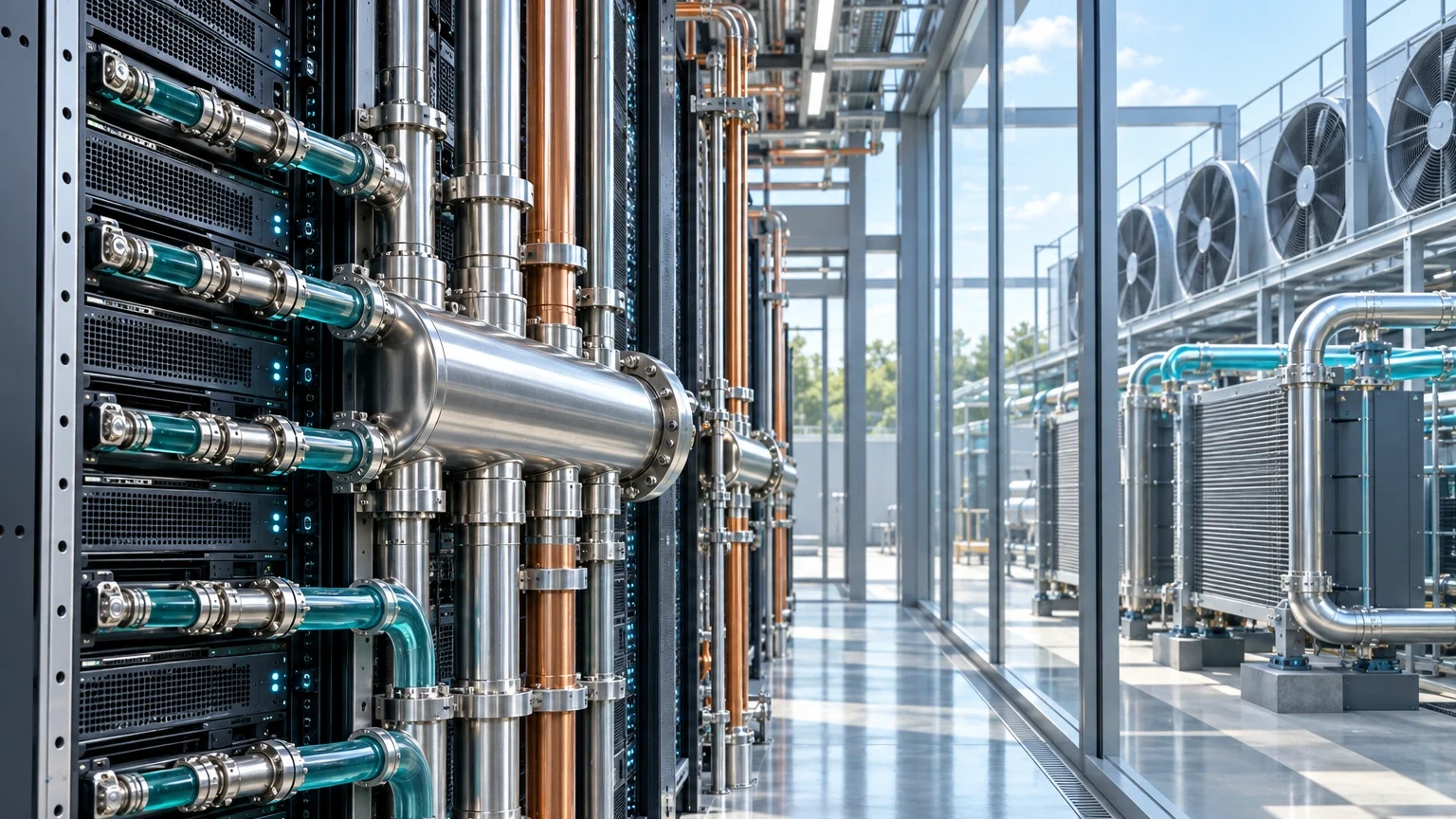
Most hyperscaler datacenters today use air cooling for the majority of their racks, with liquid cooling reserved for the highest-density configurations. Vertical-stacking memory pushes power density higher, and at some point air cooling cannot keep up. The transition to liquid cooling is not a simple retrofit. It requires new cold plates, new plumbing, new pumps, and often new facility-level infrastructure to handle the coolant supply and return loops.
This is the density-transition risk that I think the market is underpricing. Cooling retrofits move slower than roadmap slides, and they are capital-intensive. A hyperscaler that planned its datacenter build assuming air cooling for most racks now has to decide whether to retrofit existing facilities or build new ones with liquid cooling from the start. Either path adds time and cost, and both push out the date when these higher-density memory modules can actually be deployed at scale.
Thermal-design-power specifications matter here. If Samsung's zHBM or NEO's unified platform can stay within the thermal envelope of existing liquid-cooling systems, then the retrofit burden is lighter. But if the power draw per module exceeds what current cold plates can handle, then hyperscalers face a facility-level redesign. I have not seen public TDP numbers for these platforms yet, and that absence is itself a signal. Until those numbers are disclosed, the thermal risk remains unquantified.
I track cooling infrastructure as an underpriced operational risk, and this is a clear example. The memory density is real, but the ability to deploy it depends on whether the cooling system can keep pace. That is a slower-moving constraint than chip supply, and it does not show up in demand forecasts or supply-chain trackers. It shows up in construction schedules and utility bills.
Memory density announcements are being priced as supply reliefSource: Semiconductor Engineering
On the record
Source
Denser, faster, and more distributed memory architectures for AI was the big news at the Future
Semiconductor Engineering
If Packaging Scales Smoothly
The counterargument is straightforward: Samsung and Kioxia have shipped volume HBM and 3D NAND before, so the packaging and thermal challenges are not new. If packaging yields are already proven at smaller scale and if the thermal envelopes stay within the spec of existing liquid-cooling systems, then hyperscalers with that infrastructure in place can adopt these modules without major overhauls. In that case, this is a straightforward density upgrade rather than a new operational risk.
There is also the possibility that hyperscalers have already planned for this transition. Liquid-cooling deployments have been accelerating over the past two years, and some operators may have built excess thermal capacity into their designs precisely to accommodate higher-density memory. If that is the case, then the cooling constraint is less binding than I am arguing, and the packaging constraint becomes the only real bottleneck.
Finally, the OSAT capacity constraint may resolve faster than I expect. If Samsung or Kioxia have secured dedicated packaging capacity through long-term agreements or joint ventures, then the production ramp could proceed on schedule. The lack of public announcements does not prove that those agreements do not exist; it just means they have not been disclosed.
If thermal-design-power disclosures show that these modules fit within existing liquid-cooling envelopes, and if packaging-capacity commitments appear in the next two quarters, then my thesis is wrong and this is indeed a straightforward density upgrade. The falsifiable checkpoint is whether volume shipments begin by mid-2027 without facility retrofits or packaging delays.
Who Carries the Risk
The execution risk here falls on two groups: the memory and packaging suppliers, and the hyperscalers who are counting on these modules to meet their infrastructure roadmaps. Samsung, Kioxia, and NEO carry the risk of proving that packaging yields and thermal performance meet spec at volume. If they cannot, then the product remains a concept model and customers move to alternative suppliers or delay their buildouts.
Hyperscalers carry the risk of having planned their cooling infrastructure and rack density around assumptions that no longer hold. If these modules require liquid cooling and the datacenter was designed for air, then the operator either retrofits at significant cost or defers deployment until new facilities come online. Either outcome pushes out the revenue that was supposed to come from higher memory density, and it increases the capital intensity of the buildout.
The suppliers who gain leverage are the OSATs with proven advanced-packaging capacity and the cooling-system vendors who can deliver retrofit solutions on short notice. The operators who gain leverage are those who built excess thermal capacity into their designs early, either because they anticipated this transition or because they over-provisioned for other reasons. The operators who are exposed are those whose infrastructure roadmaps assume memory density improvements arrive without corresponding increases in power draw or packaging complexity.
I also watch for how this affects the competitive position of hyperscalers relative to one another. If one operator has already deployed liquid cooling at scale and another has not, then the first operator can adopt these modules faster and gain a capacity advantage. That advantage compounds over time, because inference workloads are sticky and customers tend to stay with the provider that can deliver the lowest latency and highest throughput.
The Boring Filings Tell the Story
The real story will not come from product announcements or keynote slides. It will come from the boring filings: quarterly earnings calls where hyperscalers disclose cooling-retrofit spending, supplier disclosures of packaging-capacity expansions, and customer-qualification timelines in semiconductor companies' investor updates. Those documents will show whether the operational work is keeping pace with the roadmap promises.
I also watch for changes in depreciation schedules. If a hyperscaler has to write down the value of air-cooled infrastructure sooner than planned because it is being replaced with liquid-cooled systems, that expense shows up in the financials. It may be buried in a footnote, but it is a concrete signal that the density transition is costing more than expected.
Another signal is the timing of volume shipments. Samsung, Kioxia, and NEO will eventually disclose when these platforms move from sampling to production, and customers will disclose when they begin deploying them at scale. If those dates slip, or if the initial volumes are smaller than expected, that confirms the packaging or thermal constraint is binding. If the dates hold and volumes ramp as planned, that falsifies my thesis.
I remain skeptical that the market is pricing the execution risk correctly. Memory density announcements tend to be received as unambiguous good news, but the operational reality is more complicated. The constraint has migrated from memory supply to packaging and cooling, and those constraints move more slowly and are harder to observe from the outside. That makes them easy to underprice until the delays start showing up in delivery schedules.
Signals That Settle This Bet
Packaging-capacity announcements or co-location commitments from OSATs within six months. If Samsung, Kioxia, or NEO disclose dedicated packaging lines or joint ventures with assembly providers, that reduces the packaging constraint and increases the likelihood that volume shipments proceed on schedule. If no such announcements appear, the constraint remains unaddressed.
Thermal-design-power disclosures or cooling-retrofit guidance in hyperscaler earnings calls through Q4 2026. If operators begin discussing liquid-cooling expansions or thermal-infrastructure upgrades in their prepared remarks or in response to analyst questions, that confirms the cooling constraint is binding and that the density transition is more expensive than the market expected.
Customer qualification timelines or volume shipment dates for zHBM and NEO platforms by mid-2027. If these modules move from concept to production and begin shipping at datacenter volumes within the next eighteen months, that falsifies the thesis that packaging and cooling are binding constraints. If the timeline slips or if initial volumes are limited to pilot deployments, that confirms the constraints are real and the market underpriced the execution risk.
Sources
This column argues from the following reporting. The facts belong to the sources; the opinions are the column's.