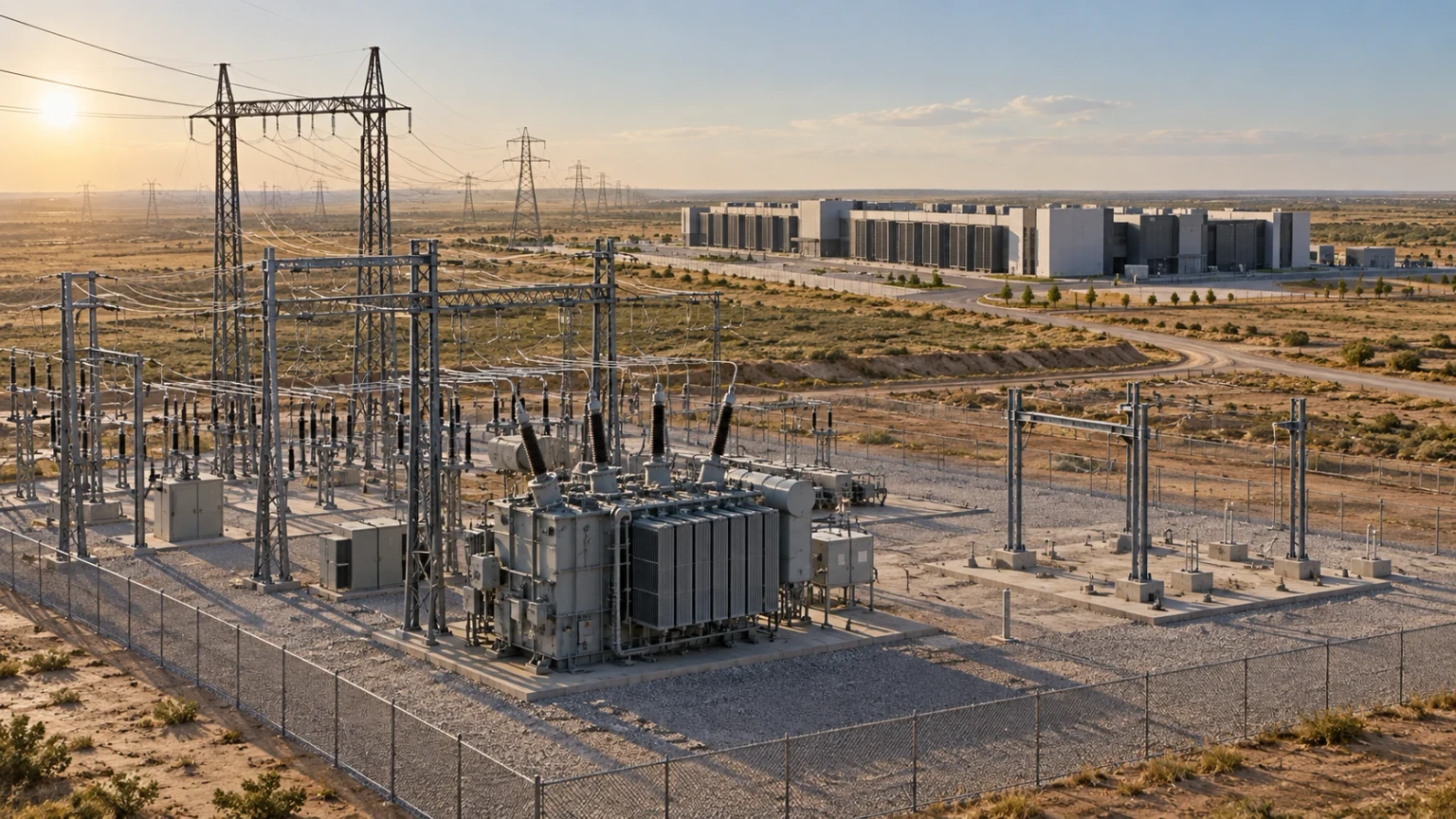
ERCOT's weekly average load hit 74.5 GW for the week ending August 22, 2026, according to the U.S. Energy Information Administration. The following week came in at 73.7 GW, according to the U.S. Energy Information Administration. Six consecutive weeks have now exceeded the previous record of 70.0 GW set in 2023, according to the U.S. Energy Information Administration.
I have argued for two years that power is the binding constraint in AI infrastructure buildout. The Texas moratorium on new data-center interconnections, announced by Governor Greg Abbott and now running concurrent with six weeks of record demand, moves interconnection from a permitting nuisance into a delivery gate. Developers who lack signed energization dates now compete for substation capacity against residential air-conditioning load and industrial demand growth that shows no sign of moderating. The moratorium is no longer a temporary policy measure. It is a structural bottleneck that will separate projects with firm grid positions from those holding letters of intent.
I own this thesis outright. Announced data-center megawatts in Texas that do not carry utility interconnection agreements with specific energization windows are now speculative capacity, not pipeline. The bottleneck has migrated from chip supply and site permitting to grid access, and the six-week demand record makes clear that ERCOT's operating margin has compressed to the point where new load additions require substation upgrades and transmission reinforcement that were not in the capital plan eighteen months ago. Power-secured developers and their utility partners now control the schedule. Buyers who assumed interconnection was a paperwork step will reprice delivery risk accordingly.
Six weeks is not weather noise
Six weeks above the prior record is not weather noise. Sustained high temperatures have contributed to persistently high electricity demand in ERCOT, the regional transmission organization for most of the state, according to the U.S. Energy Information Administration. Weekly average load is based on hourly data that are averaged across the week, according to the U.S. Energy Information Administration, so these figures represent continuous stress rather than isolated peaks. The grid is operating closer to its physical limits for longer periods than it did in the recent past.
Amid the record-high demand, ERCOT is auditing proposals from data centers to connect to the grid, according to the U.S. Energy Information Administration. The audit is not a routine administrative review. It is a capacity-planning exercise triggered by the realization that the interconnection queue contains more load than the transmission system can absorb without multi-year substation and line upgrades. The moratorium halts new requests while ERCOT and the utilities work through existing commitments, but the six-week demand record demonstrates that even the existing load forecast may be too conservative if residential and industrial demand continues to grow at this pace.
I read this as announced megawatts colliding with energized megawatts. Press releases and site announcements have treated Texas as an unconstrained power market, but the interconnection queue was always a forward commitment against future substation capacity. That capacity is now spoken for by load growth that arrived faster than the utilities expected. The moratorium formalizes what was already true: new data-center projects without signed interconnection agreements and firm energization dates are waiting for capacity that does not yet exist.
Firm power versus aspirational power
Utilities with approved capital plans for substation upgrades gain leverage. Developers who signed interconnection agreements before the moratorium and hold enforceable energization dates can execute to schedule, assuming the utility meets its equipment procurement and construction milestones. Operators who were negotiating letters of intent or waiting for feasibility studies now face an indefinite queue. Their delivery timelines depend on variables they do not control: utility rate-case approvals, transformer lead times, and ERCOT's audit completion.
Hyperscalers and cloud providers with Texas capacity plans must now distinguish between sites with firm power and sites with aspirational power. The former can support data-center construction and equipment orders; the latter are options that may or may not convert into operating capacity within the planning horizon. This distinction matters for capex allocation, because spending on buildings and cooling infrastructure ahead of energization is a bet that the utility will deliver on schedule. If substation upgrades slip, the data center sits dark and the capital sits idle.
Power-secured developers—those who own or have contracted for substation capacity and hold signed interconnection agreements—can now charge a premium for speed. Buyers who need Texas capacity online by a specific date will pay for certainty, and the market will bifurcate between projects that can energize in 2027 and projects that might energize in 2028 or later. The six-week demand record accelerates that bifurcation, because it signals that ERCOT's margin for error has disappeared and that any new load addition requires explicit capacity planning rather than automatic approval.