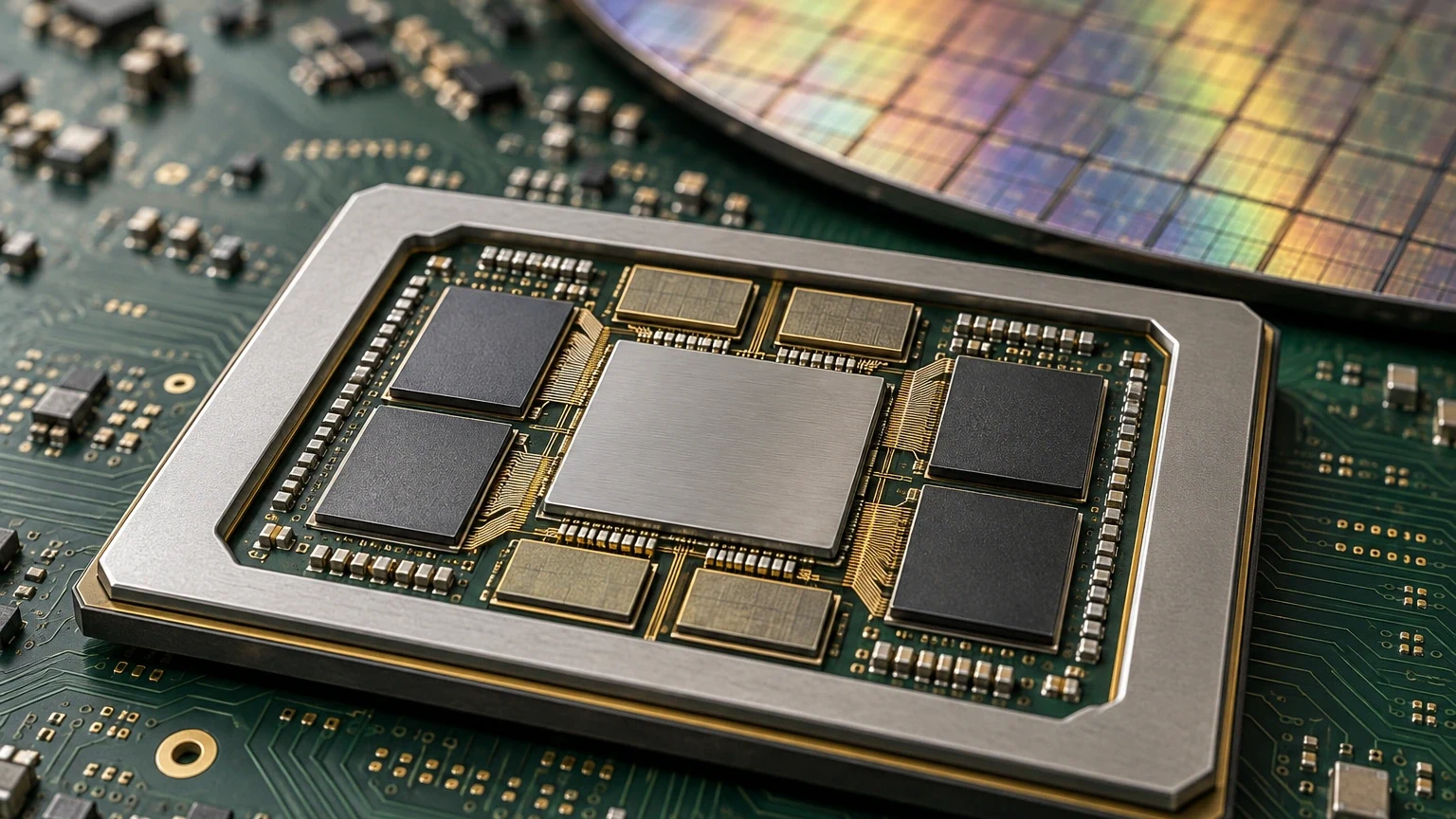
AMD paid an undisclosed sum for a Toronto startup that builds inference chips around individual models. That is a different strategy than selling general-purpose accelerators, and it only works if production inference settles into a small number of long-lived architectures. If model churn continues at the pace we saw in training over the past three years, then optimizing silicon for specific dataflows becomes engineering overhead that ships obsolete.
I think this acquisition tests whether inference demand is actually sticky in the way infrastructure investors have been assuming. Training workloads tolerated rapid model turnover because the economic value was in experimentation and capability gains. Inference is supposed to be different: once a model goes into production, the operator has every incentive to keep it there as long as it performs, because redeployment carries integration cost, validation overhead, and runtime risk. If that thesis holds, then building silicon around a handful of dominant architectures makes sense. If it does not—if inference customers rotate models as often as research labs did—then Taalas becomes a capability that AMD will struggle to monetize.
StorageReview reported that AMD has entered into a definitive agreement to acquire Toronto-based Taalas, a developer of specialized AI inference silicon. The acquisition is intended to expand AMD's inference capabilities as AI deployments shift toward real-time and high-volume production workloads, where efficiency, memory movement, and optimized dataflows are increasingly important, according to StorageReview. Founded in 2023 and led by co-founder and CEO Ljubisa Bajic, Taalas develops inference hardware tailored to specific AI models, StorageReview reported. Its approach is designed to reduce compute and memory bottlenecks common in general-purpose architectures by optimizing the inference dataflow around the target model, according to StorageReview.
The timing matters. StorageReview noted that the acquisition lands two days after AMD put its own inference stack in front of enterprises with Instinct Coder. That sequencing suggests AMD is assembling a vertical story: software stack, general-purpose accelerators, and now model-specific silicon. Whether the market AMD is targeting—enterprises and edge deployers running production inference—will pay for custom silicon when general-purpose alternatives from NVIDIA, Intel, and hyperscaler custom chips are already in volume production remains an open question.
Custom Silicon Pays When Models Live Long
The economic case for model-specific silicon depends entirely on deployment duration. If a model stays in production for two or three years, then the upfront cost of designing, validating, and manufacturing custom chips gets amortized over enough inference volume to justify the investment. The efficiency gains—lower power per token, reduced memory bandwidth, faster time-to-first-token—translate into operating cost savings that compound over time. Taalas's approach, as StorageReview described it, is to optimize the inference dataflow around the target model, which can improve efficiency for workloads where conventional GPU and accelerator architectures may carry overhead associated with broader programmability.
That overhead is real. General-purpose accelerators are built to handle a wide range of workloads, which means they carry silicon area, power budget, and memory subsystem complexity that any single inference workload does not fully utilize. If you know exactly which operations a model will execute, you can strip out the unused capability and build a chip that does one thing very well. The trade is flexibility for efficiency. That trade only makes sense if the thing you are optimizing for does not change.
Inference is supposed to be the sticky layer. Training workloads chase capability gains, so model architectures turn over as researchers find better designs. Inference workloads chase cost and reliability, so the incentive is to lock in a model that works and run it as long as possible. If that pattern holds across the industry—if a handful of foundation models dominate production inference for multi-year cycles—then custom silicon becomes a durable competitive advantage. The operator who can serve a query for half the power and a third of the latency wins the cost-sensitive deployments in edge, enterprise, and high-volume consumer applications.
StorageReview reported that AMD expects to incorporate Taalas technology into its accelerator roadmap and develop system-level inference solutions using AMD Instinct GPUs. That phrasing is careful. It does not say Taalas ships as a discrete product line, and it does not commit to a timeline. It leaves open the possibility that Taalas becomes a feature inside Instinct rather than a standalone SKU. That would be the lower-risk path: use Taalas expertise to improve inference efficiency across the Instinct family without betting the product line on model-specific designs.
Churn Risk Makes Custom Chips Technical Debt
The risk is that inference does not stabilize the way the bull case assumes. Model architectures are still evolving. We have seen rapid iteration in transformer variants, mixture-of-experts designs, state-space models, and hybrid architectures that blend retrieval with generation. If production inference follows the same churn pattern that training did—new models every six to twelve months, with meaningful performance or cost improvements that justify redeployment—then custom silicon becomes a liability.
Designing a chip takes eighteen to twenty-four months from architecture to production silicon. If the target model changes during that window, the chip ships optimized for yesterday's workload. The operator who bought it is stuck with hardware that does one thing well, but that thing is no longer the thing they need to run. General-purpose accelerators do not have that problem. They carry overhead, but they also carry optionality. When the model changes, you recompile and redeploy. When the model changes on custom silicon, you write down the hardware investment and start over.
That is the technical debt scenario. AMD acquires Taalas, integrates the team, builds a product line around model-specific inference, and ships silicon in 2027 or 2028. By the time the chips reach volume production, the models they were optimized for have been replaced by newer architectures that deliver better accuracy, lower cost, or new capabilities. The customers AMD was targeting—enterprises and edge deployers who value efficiency and cost—are already migrating to the new models, because the cost savings from the new architecture outweigh the cost of redeployment. AMD is left with a product that solves a problem nobody has anymore.
The counterargument is that we are already seeing signs of architectural consolidation. Transformer variants have been the dominant architecture for language models since 2017, and while there have been incremental improvements—better attention mechanisms, more efficient training methods, longer context windows—the core dataflow has remained stable. If that pattern continues, then optimizing silicon around transformer inference is a safe bet. The same logic applies to other model families: convolutional architectures for vision, recurrent designs for time-series, diffusion models for generation. If each family stabilizes into a canonical form that lasts for years, then building custom silicon around those forms captures durable margin.
The evidence for that thesis is mixed. We have seen consolidation in some domains and continued churn in others. Vision models did settle around ResNet and its descendants for several years, which gave custom vision accelerators a long enough window to succeed. Language models are still iterating, and it is not yet clear whether we have reached a stable equilibrium or whether we are in the middle of a longer transition.