Dell Expands AI Platform with AMD GPU and Modular Infrastructure Options
The issue is no longer demand alone; it is whether the surrounding infrastructure is ready.
- StorageReview reported a development that could affect hyperscalers & cloud planning.
- The practical issue is whether demand can be converted into reliable capacity on schedule.
- Watch execution details, customer commitments, and any bottlenecks around power, cooling, silicon, or permitting.
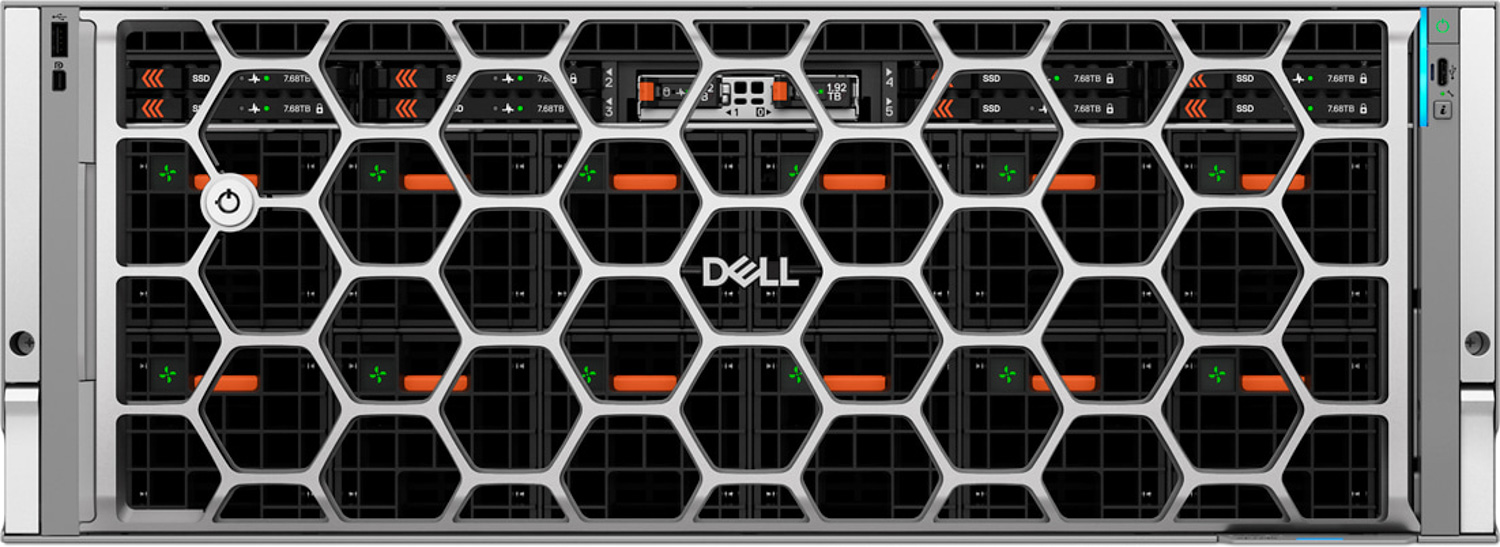
StorageReview reported: Dell Technologies has announced two major updates to its Dell AI Platform with AMD, targeting organizations scaling from pilot AI deployments to full production environments. The enhancements focus on high-performance training infrastructure and a modular architecture that balances cost, scalability, and operational control. The first update introduces a large-scale configuration featuring Dell PowerEdge XE9785 server nodes equipped with AMD Instinct MI355X GPU s and AMD EPYC CPUs. It is designed for demanding AI workloads, including model training, pre-training, and high-throughput inference. The platform integrates Dell PowerSwitch networking and PowerScale storage, ensuring a consistent infrastructure stack across deployments. Using AMD Instinct MI355X GPUs increases per-node memory capacity, enabling support for larger models and more efficient scaling across clusters. This configuration targets enterprises and service providers with continuous AI workloads that require predictable performance at scale. The second enhancement extends Dell's modular AI Factory architecture to support AMD Instinct MI350P PCIe GPUs paired with AMD EPYC CPUs. This configuration uses Dell PowerEdge XE7745 and R7725 servers, PowerSwitch networking, and PowerScale storage, and integrates with the Dell AI Data Platform. It is positioned as a cost-effective path for organizations moving from.
Read narrowly, this is one more item in the daily flow of infrastructure news. Read against the buildout cycle, it points to a more practical question for cloud infrastructure: can the operating system around compute keep up with demand? The constraint is not only the price of electricity. It is the timing of grid access, the flexibility of large loads, and the ability of data center operators to behave less like passive consumers and more like active participants in the power system.
That makes the second-order detail more important than the announcement language. Power access and interconnection timing are likely to matter more than the announced demand signal itself.
For infrastructure teams, that makes power procurement and site selection part of the product roadmap. A campus can have customers, capital, and equipment lined up and still lose time if the grid connection, market rules, or operating model cannot absorb the load profile.
The financial question is whether this improves pricing power, secures scarce capacity, or exposes execution risk that is still being discounted, the operating question is procurement timing, facility readiness, power access, and whether adjacent constraints slow deployment, and the customer question is whether this changes build sequencing, partner dependence, or the cost of scaling clusters across regions.
The market tends to price the demand story first and the delivery work later. That can hide the hardest parts of the buildout: grid queues, procurement windows, permitting, vendor capacity, and the coordination needed to turn a plan into a running site.
For a board focused on AI infrastructure, the item matters because it clarifies where leverage may sit. Sometimes that leverage belongs to chip suppliers or cloud platforms. In other cases it moves to utilities, landlords, financing partners, equipment vendors, or regulators that control the pace of deployment.
The next signal to watch is customer commitments, infrastructure readiness, and any signs that power, cooling, silicon supply, or permitting becomes the real bottleneck. The next test is whether this remains a narrow market experiment or becomes a normal tool for balancing AI demand with grid reliability.